Practice
News
- The debate surrounding the SCA judgement on the value of assets declared in an accrual ANC, roils on and I suspect that the last word on this matter has not yet been spoken: https://www.derebus.org.za/entrenching-inequality-the-scas-approach-to-commencement-values-in-antenuptial-contracts/
- Criticism of the JSC Tribunal in the Judge Mbenenge affair has been intense and public.
- The LPC will replace the current four-paper attorney examinations with a new five-paper from next year. Reportedly Paper 3 recorded only a 28% pass rate in March last year. The bookkeeping paper will be updated to test modern software ability, rather than obsolete practice. Interestingly, there is no pass rate stats available on the September 2025 conveyancing exams.
Hard news
- The following SCA case deals extensively with the issue of exceptional circumstances where leave to appeal was refused – worth a read for litigants: https://www.saflii.org/za/cases/ZASCA/2026/9.html
- The following SCA case is a salutary reminder of the adequacy and notification required for disclaimers: https://www.saflii.org/za/cases/ZASCA/2026/8.html
- If the term Chartaprops defence is not known to you, you might seriously consider reading this judgement: https://www.saflii.org/za/cases/ZASCA/2026/7.html
- A recent case on settlement agreements, brought to mind a question that was asked of me recently: can one, in a divorce settlement agreement, provide that, on death, the other party will receive one’s fixed property? Is this not a pactum succesorium? The answer appears to lie in formulation; if formulated as a contract to receive delivery (i.e.., creating a right to claim emanating from contract) with delivery postponed until death, then the contract should be upheld. Where a court includes the settlement agreement in the divorce order, then such an issue cannot arise.
- Varying a trust deed is often problematical; a court is not entitled to rely on fairness in the face of clear provisions of the trust deed: https://www.saflii.org/za/cases/ZAFSHC/2026/19.html
- This case raises quite an interesting point: can the Master refuse to make a decision, citing disputes which he feels should be reviewed by a court: https://www.saflii.org/za/cases/ZAGPPHC/2026/24.html
- The following is quite an interesting case on the requirements for a Universitas Personarum; tests for its juristic personality: https://www.saflii.org/za/cases/ZAGPPHC/2026/12.html
- Debt consolidation by a lender, not registered as Credit Provider in terms of the NCA, declared reckless conduct and set aside: https://www.saflii.org/za/cases/ZAWCHC/2026/32.html
- Do you know a contract type, referred to as a consumption for loan agreement? https://www.saflii.org/za/cases/ZAWCHC/2026/17.html
- Arbitrio boni viri principles set out (@80): https://www.saflii.org/za/cases/ZAWCHC/2026/5.html
Conveyancing
- An interesting case, dealing with a person seeking to interdict the transfer of immovable properties, following on an auction by the trustees of an insolvent estate, may be found at; https://www.saflii.org/za/cases/ZAFSHC/2026/22.html
- Attorneys in trouble:
- does the failure to file a discovery affidavit by an attorney cause recoverable loss: https://www.saflii.org/za/cases/ZAFSHC/2026/20.html
- the principles applicable to the suspension from practice: https://www.saflii.org/za/cases/ZAGPPHC/2026/38.html
- Non- disclosure of a material defect; i.e. zoning objections and the intended cancellation of a contract: https://www.saflii.org/za/cases/ZAGPPHC/2026/16.html
- Fideicommissa multiplex and farms are bad news: https://www.saflii.org/za/cases/ZAGPPHC/2026/42.html
- Restititio in integrum on the cancellation of a sale of immovable property that had been destroyed in a fire – quantification: https://www.saflii.org/za/cases/ZAGPJHC/2026/61.html
- It is not often that an individual is declared to be a vexatious litigant: https://www.saflii.org/za/cases/ZAWCHC/2026/29.html
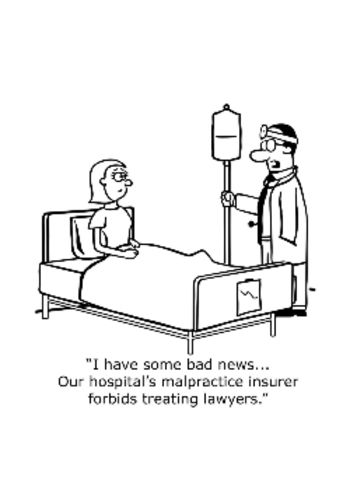
Lighten Up
What’s the difference between a lawyer and a liar? The pronunciation
Q: Why do vampires refuse to take money for sucking the life out of someone?
A: To differentiate themselves from lawyers.